by Emma Nov 27,2025
Si vous suivez notre actualité, vous connaissez probablement déjà Backbone, la société de périphériques connue pour ses manettes polyvalentes – en particulier le style enveloppant qui s'attache à l'arrière de votre téléphone (vous voyez ?). Maintenant, Backbone s'associe à nouveau avec l'univers déroutant de Death Stranding de Hideo Kojima.
Oui, la série souvent décrite comme le simulateur de marche ultime vient de sortir son deuxième volet majeur. Death Stranding 2 a reçu des éloges similaires de la critique – et une intrigue tout aussi déconcertante – que le premier jeu. Cette suite a également incité le studio de Kojima à s'associer avec le développeur de réalité augmentée Niantic pour un prochain spin-off mobile.
Et même si vous pourriez ne pas le considérer comme essentiel, si vous êtes un fan inconditionnel de Death Stranding 2, vous aurez bientôt une toute nouvelle façon de montrer votre allégeance. La manette Backbone One Death Stranding 2 : On the Beach présente un design exclusif et est livrée dans un étui de collection – chacune étant individuellement numérotée pour les collectionneurs sérieux.
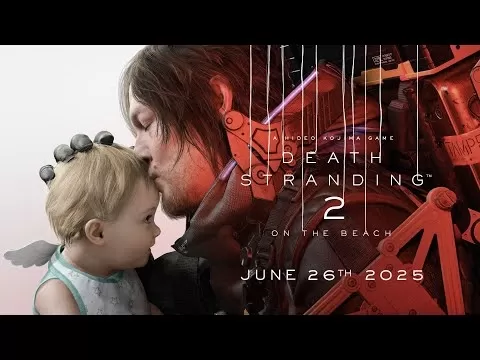
Bien sûr, ce n'est pas seulement pour l'apparence, quelles que soient les affirmations de Backbone. La Backbone One est entièrement fonctionnelle et performe tout aussi bien avec une variété de titres à succès sur iPhone et Android qu'avec PlayStation Remote Play – idéale pour profiter de Death Stranding 2 sur un appareil portable. Elle prend également en charge Apple Arcade, GeForce Now et d'autres services de streaming.
Cette collaboration représente également le tout premier partenariat de Backbone avec PlayStation, propriétaire de Kojima Studios. Même si Death Stranding 2 n'est pas votre tasse de thé, ne négligez pas ce matériel – comme souligné dans notre avis sur la Backbone One, elle reste à la base une pièce d'équipement de jeu de premier ordre.
En attendant, bien que Death Stranding soit disponible sur iOS, il existe de nombreux autres jeux captivants qui offrent une sensation similaire. Consultez notre sélection des meilleurs jeux mobiles comme Death Stranding pour nos recommandations personnelles !
Personnages abandonnés classés: Liste de niveau Mise à jour 2025
Comment utiliser les astuces dans Balatro (Guide du menu de débogage)
L'état de jeu révèle des mises à jour excitantes: PlayStation février 2025 vitrine
Infinity Nikki - Tous les codes de rachat de travail janvier 2025
Roblox : Obtenez les codes secrets pour janvier 2025 (mis à jour)
Pokémon GO Raids en janvier 2025
Wuthering Waves : utilisez les codes pour janvier 2025 !

Lego Ninjago set en tête des graphiques (2025)
As Ironheart concludes its debut season, fans are left reeling from major character revelations—and particularly, the shocking introduction of a new, powerful antagonist. Creator Marjorie Liu has spoken out about the finale’s twist, emphasizing that while she played a key role in shaping the story, the decision to reveal this major villain was not solely hers. In a recent interview, Liu revealed, “The reveal of [the antagonist’s] true identity was a collaborative effort across the creative team and the larger Marvel Studios leadership. While I had strong opinions and built the narrative foundation, the final call on who this character is—and how they’re introduced—was a shared vision. It wasn’t just my call alone.” The character in question, who has long been hinted at as a shadowy force behind Ironheart’s challenges, is now confirmed to be a high-ranking figure within the greater MCU’s political and technological landscape. Their connection to both Riri Williams (Ironheart) and past story arcs—particularly involving Tony Stark and the legacy of Stark Industries—has fans speculating about the ripple effects this will have on future storylines. Liu also hinted that this antagonist’s presence could have lasting implications for other MCU characters. “This isn’t just about Riri,” she said. “It’s about what happens when legacy, innovation, and power clash—and how that tension affects everyone from Black Panther to She-Hulk to even newer heroes who’ve yet to step into the spotlight.” With the MCU currently in the middle of its multiverse-heavy phase, the introduction of this antagonist may signal a shift toward deeper exploration of systemic issues—corporate control, technological ethics, and the cost of legacy—themes that have long underpinned Ironheart’s journey. As fans await news of a potential second season, one thing is clear: the finale wasn’t just a story end—it was a catalyst. And according to Liu, it was a decision shaped by more than just one creative mind.
Apr 01,2026
Soul Park : Construisez un parc d’attractions en enfer dès maintenant
Mar 31,2026
Naruto Shippuden x Free Fire : La Guerre des Ninja débarque sur Android
Mar 31,2026
In 2022, Capcom confirmed that it had explored the idea of developing an open-world, online Resident Evil game before ultimately scrapping the project. The concept was part of a broader initiative to expand the beloved survival horror franchise into new formats, particularly leveraging the growing popularity of online multiplayer and open-world experiences seen in games like The Last of Us Part II, Horizon Zero Dawn, and Red Dead Redemption 2. According to interviews with Capcom's leadership, including producer Jun Takeuchi and producer and director of Resident Evil Village, Capcom was interested in creating a more expansive, persistent world for Resident Evil, possibly featuring co-op or competitive multiplayer elements, where players could explore vast environments, scavenge resources, and face off against terrifying enemies in a shared online space. However, despite initial excitement and concept development, the project was eventually abandoned. Capcom cited a desire to stay true to the core identity of Resident Evil—a franchise built on tension, atmosphere, and story-driven horror—as a key reason for shelving the open-world direction. The team felt that the open-world format, while appealing for other genres, might dilute the franchise’s signature pacing and fear-based gameplay. Instead, Capcom has since focused on refining and expanding the Resident Evil experience through more traditional, narrative-driven entries such as Resident Evil Village and Resident Evil 4 Remake, as well as exploring new formats like Resident Evil 7: Biohazard’s immersive first-person horror. The scrapped project remains a notable "what-if" in Resident Evil lore, illustrating how even iconic franchises must balance innovation with preserving their foundational DNA. Capcom has since hinted at future experiments—such as the Resident Evil Re:Verse spin-off, which offers multiplayer action—but the idea of a full-scale open-world Resident Evil online game remains on hold, at least for now.
Mar 30,2026
Les combats de vers débarquent sur Apple Arcade
Mar 29,2026